Nutrition and daily routine guide
Meals, appetite and hydration for older adults
Build calm meal routines, smaller portions and steady hydration without turning every meal into a discussion.
Appetite often changes as people age. A smaller plate is not automatically a crisis, but skipped meals, weight changes, low energy or poor fluid intake can affect daily life. This guide focuses on practical, non-medical support: routines, appealing food, shared meals and clear notes for conversations with a doctor.
Key points
- Serve smaller portions more often; a full plate can feel like pressure when appetite is low.
- Keep drinks visible and familiar, and make fluids part of regular transitions in the day.
- Company, routine and easy choices often help more than persuasion or repeated reminders.
- Contact a doctor about persistent appetite loss, swallowing discomfort, weight change or reduced fluids.
Create a rhythm that suits the day
Three large meals may no longer fit. A calmer pattern may be a small breakfast, mid-morning snack, light lunch, afternoon drink and nourishing early supper. The aim is regular fuel, not a clean plate.
Plan around appetite, not the clock. If mornings are slow, offer something light first and a better meal later. If evenings are tiring, make the main meal at noon. Keep mealtimes consistent enough to predict, but flexible enough to respect hunger and mood.
Prepare the space before the meal. Clear clutter, use bright light, switch off loud television and set out one or two easy choices. A familiar placemat, properly weighted cup and suitable cutlery help the person start independently rather than waiting for help.
Ask your parent what makes a meal feel worthwhile. For some people, that is taste; for others, it is a warm bowl, a set time or company at the table. The answer can guide the routine more usefully than a perfect nutrition label.
Keep a short weekly record: what was offered, what was eaten or refused, fluids that worked, energy during meals and any difficulties. This turns “she is not eating well” into useful details for a health care provider.
Make food appealing and manageable
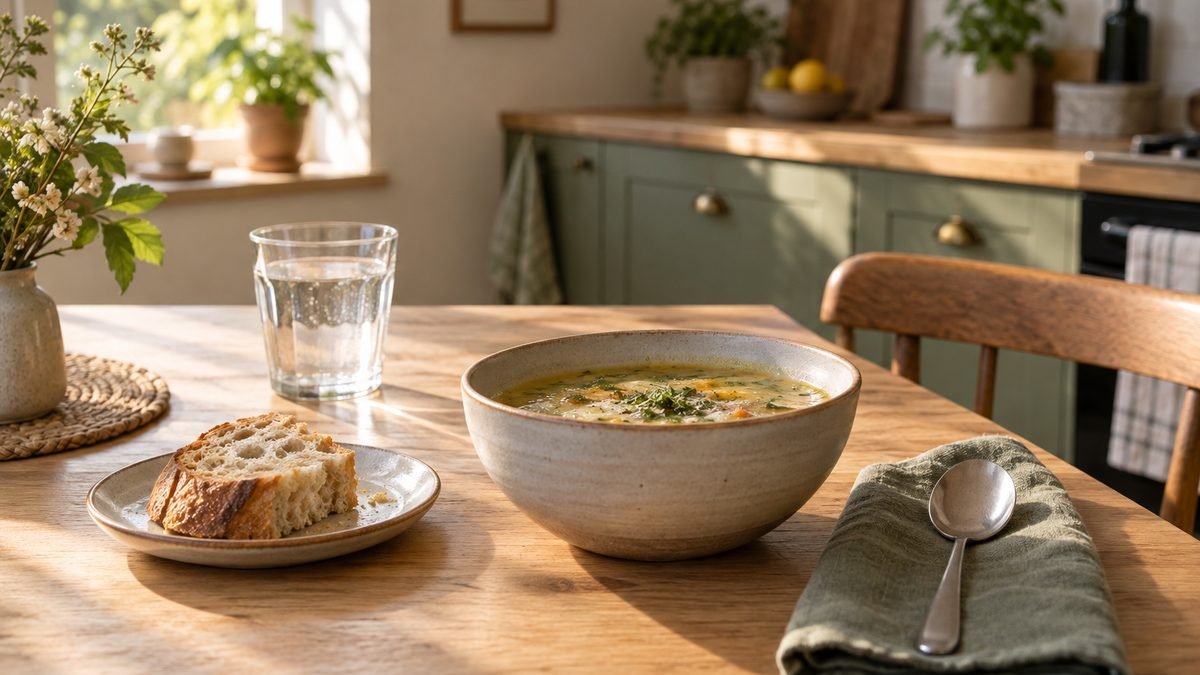
Appearance, smell and variety matter. Serve a small portion that can be finished, then offer seconds. A bowl of soup, half a sandwich and sliced fruit may look achievable where a full plate does not.
Protect favourite flavours and routines where possible. Ask which foods have always been comforting, which smells are pleasant and which textures have become difficult. Keep bread, cheese, eggs, yogurt, soft fruit, soup or leftovers available for low-energy moments.
Practical shopping and preparation steps include:
- washing and cutting fruit in advance;
- freezing individual portions of favourite meals;
- keeping easy snacks where they can be seen;
- preparing a jug or bottle of water for the day;
- choosing cups and mugs that are comfortable to hold.
Food safety and waste also affect appetite. Keep a simple rotation of perishable items rather than buying more than one person can use. Label leftovers, freeze portions immediately and replace unfamiliar bulk items with a few foods your parent actually enjoys.
If chewing, cutting or holding utensils has become harder, choose foods that can be eaten with a spoon, fork or hand without embarrassment. Serve one course at a time and offer sauce, gravy or a drink if dryness makes swallowing slower. Report persistent chewing or swallowing difficulty to a doctor rather than adjusting meals on your own.
Do not argue about food. Offer, sit together, keep the mood light and remove the plate without comment after a reasonable time. Repeated pressure can make mealtimes something to avoid.
Support hydration and shared meals
Fluids are easier when they belong to the day. Offer water after washing, with medicine reminders if applicable, before appointments and after a walk. Tea, milk, soup, diluted juice and water-rich foods can all count toward the routine, but follow any guidance a health professional has given about specific fluids.
Make drinking dignified. A heavy glass, a spill-proof cup that looks like children’s tableware or a bottle that requires help can turn a simple offer into a reminder of loss. Test a few options, keep the successful one clean and put it back in the same place.
Watch for practical barriers: a bottle that is hard to open, a cup that is heavy, drinks stored out of sight, fear of spills or concern about needing the bathroom quickly. Solve the barrier before repeating the offer.
Eating with someone is often more effective than eating under observation. A family member, friend or companion care visitor can prepare a simple lunch, sit at the table and keep conversation away from performance. Community meal programs may also provide routine and company; 211 Ontario lists local options.
A weekly meal plan can reduce decisions without removing choice. Write two breakfasts, three lunches and two supper ideas your parent accepts, then repeat them in rotation. Shopping becomes shorter, waste falls and the person preparing food does not have to invent a new plan during a low-energy day.
When appetite or fluid intake changes, contact the person’s doctor rather than turning family meals into a private nutrition plan. A record of dates, foods, fluids and symptoms helps that conversation. Family can continue shopping, preparation, company and encouragement while a health professional investigates the cause.
Common questions
How can I encourage an older parent to drink more?
Put fluids into the day rather than relying on reminders. Offer water after washing, with meals, before appointments and after activity. Use easy-to-open bottles, comfortable cups and a drink the person likes, and keep fluids within sight.
What should I do when a parent says food does not interest them?
Serve small portions, keep favourites available and make mealtimes social. Record the pattern for a week, then speak with the doctor if low appetite continues, weight changes or the person is eating far less than usual.
Can a caregiver help with meals without giving nutrition advice?
Yes. A non-clinical caregiver can shop, prepare food, serve meals, offer company, keep the kitchen tidy and record what was accepted. Questions about a special diet, swallowing difficulty or the cause of appetite loss belong with a qualified health professional.
For broader public resources, review Public Health Agency of Canada healthy ageing and seniors’ resources, 211 Ontario’s community service directory, and Ontario’s home care guidance for seniors.
Sources
Related: companion care · caring for the family caregiver · what a PSW can and cannot do